czwartek, 6 grudnia 2012

Strawberry - requirements


To develop healthily, strawberries need full sun and sheltered location. As the flowers develop after the end of the cold period, they are endangered by late frost. Optimal conditions for strawberries has a profound and well-drained soil. He should be humus and nutrients. Particularly beneficial is a slightly acidic soil with a pH between 5.5 and 6.5. The root system of the strawberry is very sensitive and can be affected by various soil-borne fungi. On wet or prone to waterlogging soil should not be cultivated strawberries, because the roots are then commonly affected by the pink rot (Phytophthora fragariae). Almost all popular varieties are also susceptible to very susceptible to Verticillium wilt, caused by the fungus on strawberries Verticillium dahliae. Plots where potatoes have ever been, are occupied almost certainly with Verticillium microsclerotia and therefore unsuitable. On parcels on which have already been frequently strawberries, you have an infestation of crown rot (Phytophthora cactorum) or black root rot, likely caused by several soil fungi. Some kleinwüchsigere strawberry varieties are also suitable for sunny balconies.

Just about strawberry - part 2


Commercial cultivation began in Germany in 1840 in Staufenberg near Baden-Baden. Approximately 1,000 species are available to growers, but only a few meet the demands of trade, the value of large and handsome fruit sets that are transportable and little susceptible to bunch rot. The commercial cultivation of strawberries, outdoor done in two ways: growing with mulch film (with or without dam) and growing by straw cover. The cover of the base is used to prevent contamination of the fruits. The different forms of culture in relation to the effect gradually increasing soil warming staggered harvest times, which is, from an economic point of view. In recent decades, increasingly spread the cultivation of strawberry in substrate on racks under glass or foil. This allows up to three crops a year and reduce the major cost labor. Also can not be soiled, the strawberries and the roof due to the pressure is less fungus. The main crop of strawberries in Central Europe will be held in the months of May and June. The popular with home gardeners called months strawberry blossoms and bears fruit from May to October and is therefore called "everbearing" strawberry. Fruits that have traveled long transport routes, are almost all year round in stores. In autumn and winter fresh strawberries come from Israel, Egypt and overseas to us, from February from Spain and Morocco, in March from Italy and France.

Just about strawberry


The garden strawberry was created in the 18th Century Europe, from the intersection of the two American species strawberry Fragaria chiloensis (Chile-strawberry) and Fragaria virginiana (scarlet strawberry). She's just like the original parents octoploid (8n = 56). The set of chromosomes has made the composition AAA'A'BBB'B ', the A-chromosomes are similar to the chromosome number of wild strawberry and recognize the B-Chromosensätze relationship with the Fragaria iinumae. When and where the species originated Oktoploidie the output is unknown. From the original form of the garden strawberry many varieties have been bred. Fragaria × vescana about is a hybrid of garden strawberry with wild strawberry with tenfold chromosomes.

Appliance the strawberry


Crop: cultivated in all countries of the temperate and subtropical regions in the cooler because of the delicious fruit. According to the FAO the largest producer in the world is the United States where, in the past five years, collecting an average of about 1100 thousand. tons. Further producers are Spain, Russia and Turkey. Polish the production of over 180 thousand. tonnes per year is in seventh place in the world. Strawberry Kashubian or "Kaszëbskô Malena" is entered in the European system of geographical indications and designations. Commission Regulation (EC) No 1155/2009 of 27 November 2009, the product name was registered as a Protected Geographical Indication. Strawberries in production are usually propagated by vegetative runners.

Strawberry - The stem, leaves, flowers, fruits


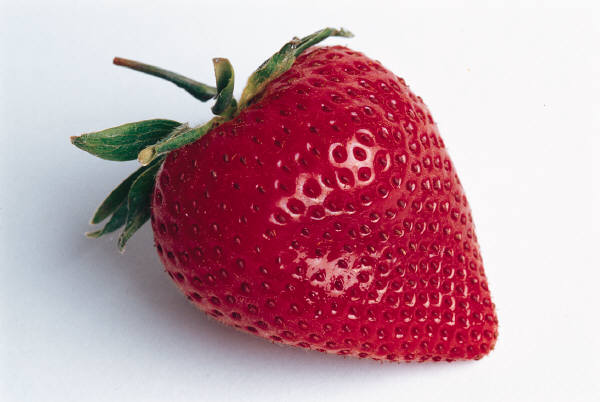
Short of a small increase of the length, but with a growth in the thickness, forming runners called "whiskers", by which spreads vegetatively and reproduce. Bisexual, consisting of 5 white petals crown or a different number of times and sepals arranged in two okółkach and glass. The outer whorl is smaller parcels, the inner are longer and wider. After przekwitnieniu adhere to the fruit. At the bottom of the raised flower is approximately 20 bars and rods 20-30. At the time of flowering inflorescence przygięty arched to the ground. After pollination flower bed flower grows, creating edible berry fruit that is apparent collective. On its surface are formed many nuts, fruits that are relevant. Peanut color depending on the variety, from cream with reddish to purple. Some cultivars may result in a few times a year.

Strawberry - step by step


Strawberry - a hybrid of two species of the plant family Rosaceae strawberries has many common names: strawberry pineapple, strawberry fruited, but most often simply called the strawberry. Hybrid has been produced in Europe at the crossroads coming from eastern North America with Chilean strawberries Virginian, which was made in 1712. Grown because of the edible fruits, in terms of Central exceptionally and temporarily becomes wild (ephemerophyte).